Well, it's been a while since I posted because it's been a while since I've paddled. I have been on the water - a few workout paddles, a quick river trip to try out a new boat - but nothing to write home about (I guess that makes this blog my home...). Partly it's due to the incredibly dry winter we are having in California, leaving the normal rivers too low to boat. Partly it's the high gas prices that make trips to the coast a little expensive for just an ordinary paddle. Partly it's been work - winter means covering the retail floor and planning the season ahead. But mostly I just haven't been incredibly motivated to paddle.
Everyone goes through lulls and I've been focused on a lot of other things in my life. It's not that I don't enjoy paddling anymore but it just moved down the list of priorities for a little. And sometimes once you step away it's easy to forget why you used to put so much effort into getting out on the water. But if you're lucky you have some friends there to remind you.

So this past weekend I taught at the
Golden Gate Sea Kayak Symposium. It's an awesome event with great coaches from around the world and students from up and down the west coast (and beyond). This was the fourth year and it now feels like old home week. But it actually started out a little rough for me. I was leading the coastal tour on Saturday and we made the bold decision to launch from Rodeo beach and paddle one way around Pt. Bonita and in under the Golden Gate bridge. It's always a little nerve-wracking to take students through the dumpy surf and into such an exposed location, especially when the forecast is for 9'-12' swells and winds to 25 kts. But I had help (Deb Volturno was teaching with me) and the students were eager. We all got off the beach fine and I decided to roll to cool down in the warm sunshine. But on my way up I hurt my knee (subluxed kneecap) and flailed trying to complete my roll without my leg. I swam and I was in pain. But we got me back into my boat and I could paddle, if not walk, so we continued on.

Things went smooth around Pt. Diablo and we stopped at black sands beach for a nice lunch. Getting out of the boat was more painful than sitting still but at least I could still limp around. As we ate the wind picked up and after a little excitement on the launch we tried to head in past Pt. Diablo. But the ebb was early and strong, and the big swells had arrived, creating some really challenging conditions. One of the students flipped just short of the point and we did a quick rescue to get him back in his boat. But in the confused seas he flipped again before he could really get going. Luckily the safety boat was nearby and I waved them over - we loaded him up and they took him around the corner where we all regrouped in the shelter of the point. It was the first time I've ever used a safety boat but it was the right call - there wasn't any real danger and we could have gotten him back in his boat and headed back to black sands to wait out the current. But the safety boat saved the time and hassle and allowed that student and the entire group to continue on with the trip and get the most out of the day. By the time we got back everyone was happy and excited about the successful day but I was exhausted - it wasn't exactly a smooth return to paddling and I was worried I had spent all my energy when I had another day of teaching ahead.
So I took the evening off - I skipped the presentation by Jon Turk (I heard it was great) and I got a warm shower and some pleasant conversation. The next day I was teaching Advanced Rock Gardening though I didn't know if I was going to be working with Roger Schuman or Jeff Laxier. The forecast was worse and the uncertainty of it all weighed on me that evening. But I was second chair for the day and I trusted that either Jeff or Roger could carry the load if necessary.
I ended up with Jeff, a good friend of mine who runs
Liquid Fusion Kayaking out of Ft. Bragg, CA. As always, he brought enough energy for the entire group and he chose an ambitious plan of heading out to Pt. Diablo and working our way back in. It would mean trying to come in under the bridge against a major 4.8 kt ebb at the end of the day. But once again the students were eager and we hit the water. My knee was fine once in a boat but my shoulder was hurting (trying to roll without my legs was a bad idea). It was a fair bit of work getting the class to cover the distance while still teaching skills and concepts - a very dynamic and challenging teaching environment. But we made it around the point and found some good features to push the students without creating too much carnage. We came back around the point for lunch and after a full day of playing we were ready to head in. The safety boat warned us that the earlier class had a couple swims fighting the ebb and we prepared for the worst. But the current was fading quickly and it was a piece of cake. Some folks even went back out to try it a second time. Once again when we got to shore it was smiles all around. The weekend was a success and I had even gotten a little energy back.

While in the parking lot cleaning up I finally got the chance to talk with my friend
Paul Kuthe. We had said hi earlier, but as is often the case at such symposiums there was no time to talk since we weren't teaching together. But Paul and the rest of the Portland crew were going to stick around California to paddle for a few days. And I had conveniently arranged to take a couple extra days off work. So the plan was formed to head up to Ft. Bragg and meet up with Jeff's partner
Cate (Jeff was staying to do the BCU Five Star training) for a couple of day of rock gardening on the Mendocino coast.

After a couple of days of teaching that were fun but hard work, it was great to get out on the water just for fun. On Monday Cate took us to Noyo Habor, a two minute drive from her house (where she kindly put us all up). We didn't launch until noon and we didn't paddle more than half a mile. It was a mellow and relaxing afternoon (that still cracked two boats and ripped a drysuit) and we topped it off with a nice dinner overlooking the harbor and some ice cream and beer back at Cate's. The next day we drove a little further and launched from Van Damme for some cave and tunnel exploration (with no damage of any kind). My shoulder was still hurting and my limp still noticeable, but as we sat on the beach and watched the sunset before driving home, I had remembered what was so great about paddling. It was the people and the place, the bounce of the waves and the splash of the sea, the sense of belonging and the fun without effort. This is what I had been missing.
We still have no rain and my schedule is more office than paddling. I may not get the chance to boat with friends again in the near future. But I won't forget the past four days anytime soon. And I know I'll be back to have more good times sometime in the future. And when I do I'll be happy to share them with y'all.
Enjoy the video and some
pictures.

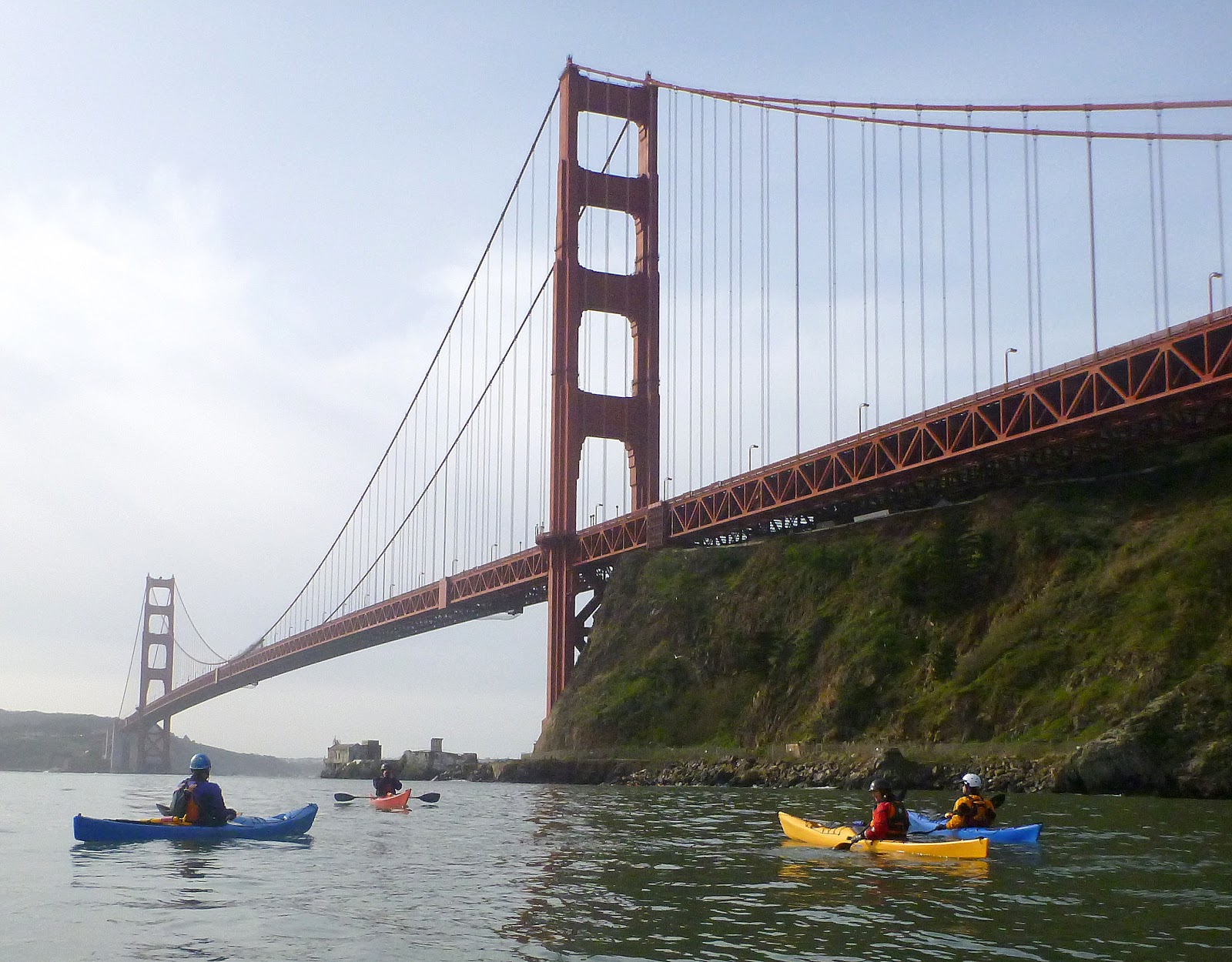 So this past weekend I taught at the Golden Gate Sea Kayak Symposium. It's an awesome event with great coaches from around the world and students from up and down the west coast (and beyond). This was the fourth year and it now feels like old home week. But it actually started out a little rough for me. I was leading the coastal tour on Saturday and we made the bold decision to launch from Rodeo beach and paddle one way around Pt. Bonita and in under the Golden Gate bridge. It's always a little nerve-wracking to take students through the dumpy surf and into such an exposed location, especially when the forecast is for 9'-12' swells and winds to 25 kts. But I had help (Deb Volturno was teaching with me) and the students were eager. We all got off the beach fine and I decided to roll to cool down in the warm sunshine. But on my way up I hurt my knee (subluxed kneecap) and flailed trying to complete my roll without my leg. I swam and I was in pain. But we got me back into my boat and I could paddle, if not walk, so we continued on.


