Showing posts with label Paddler's Journey. Show all posts

Thursday, April 23, 2020

So There Was This Time When...

If there's anything kayakers like (almost) as much as paddling, it's telling paddling stories. Around the campfire, while sitting on the beach, or even while kayaking, we all love to share our past adventures and hear about what other people have done, be it large or small. Stories are one of the strongest bonds that tie humanity together, and while they can serve as a pleasant way to relax in good times, they also serve as a support system and a way to strengthen communities during times of stress.

As someone who's shared a lot of stories (shameless self-promotion: my kayaking memoir A PADDLER'S JOURNEY is available in paperback or ebook), I encourage everyone to take some time to write your own stories down on paper or computer. Maybe even record a video. Save your stories now while so many of us are alone and isolated and with each passing day our memories of what really happened fade a little bit more. Share them with your buddies or your local kayak club. Or save them for your kids when they get older (and can handle the truth). You'll find the process of writing or recording will force you to remember more. It will make the images clearer and the idea behind the store more forceful. It will give you more happiness in the moment and it will save some for posterity.

And as a writer and paddler I have a few pieces of advice to get the most out of your stories (caveat: feel free to ignore everything I say because what works for one person doesn't work for everyone. Find your own path).

- Think about your audience. When you're telling someone a story, that person is right in front of you and you automatically tailor what you say to who they are and how they react. Writing is different. You have to think about who you want and expect to read this. Are they a paddler? Do they know what a boof or a pourover is? Will they want to hear about a grand adventure they might never be able to do themselves or would they like to hear about something that reminds them of what they've already experienced? Do you want them to learn a little more about who you are as a person or do you want them to have a good laugh? Maybe your audience is just yourself, and you want to record your stories so you don't forget the little details later. Until you know who you are writing for it's very hard to get anything right.

- Think about the point of the story. When we're talking in real-time, we normally share a series of events that can ramble around and around, even circling back before arriving at a theme, but when you organize a story into a different medium it becomes necessary to have a point to the whole thing from the start. A thread the action carries through it. It doesn't have to be something deep and grand, but it should be something relatable. Something like: mishaps happen to the unprepared (and it's funny!); it takes courage to attempt something that will change you; friends in hard times are important. Sometimes you won't really see what your point is until you finish the story - but that's a good time to go back and start again! Which leads to the most important point:

- Editing is necessary. Everyone's first draft is pretty crappy compared to what they are capable of. You might be able to get something down on paper the first go-round that is easy to read and gets the point across, but I guarantee you will be able to improve it if you take another look and spend a little more time on it. Editing isn't everyone's favorite thing to do, and it might not be necessary if your goal is simply to record the facts, but it really is the best way to get something out of your own writing. It's when you have a chance to analyze not only what happened but how it sits in your mind and fits into the bigger picture. It allows you the creativity to change and improve how you word things. It's the core of what writing really is.


I hope you all take the time to write out your stories. Share them - you can do it here in the comments if you want. I've shared many over the years, but here's one I don't think I've told before, just to show that it doesn't have to be a long epic, it doesn't have to require near-death experiences or hilarious adventure. It just needs to connect us to the humanity in everyone.


The Best Tip

I've taught a lot of kayak classes and the particulars tend to blend together, but one sticks out not for what happened on the water but afterward. There was a mother (mid 40's) and daughter (college student) in a beginning whitewater class. Neither were great athletes or outdoor adventurers. They both did fine, as I recall, but it was clear the mother had signed them up as a bonding experience, and me and my fellow instructor were wise enough to stay out of their way and let them enjoy their time together. After our wrap-up for the two-day class the mother came over with a big smile and gave us a generous tip - more than enough for the two of them. Always nice to get some extra cash for having the sense not to work too hard.

A few minutes later, as me and my buddy were cleaning up gear, the daughter came over, a little hesitantly. She said she didn't have any money, but she was an art student and she had made a couple postcards as a class project and wanted to give each of us one. I think we all knew that a couple of river bums who lived in tiny rented rooms weren't really the art-collecting type, but we expressed our gratitude and she rushed back to her mom. I headed home and threw the card in my desk drawer.

Here's the part where you might expect me to say I still have that card. Maybe even framed it and put it up on a wall now that I have a house (and a daughter) of my own. But I don't. It's long gone. I mean, it stayed with me for half a dozen moves and it was always right there in my desk whenever I sat down to write. But years ago I needed to send a thank you note to a friend who had been there when I needed them. I knew what card to send.

You see, the card had made me feel good about myself for having helped another person feel a little joy. It only seemed proper to send it along to give someone else that same feeling of satisfaction and gratitude. And that's my tip to you: art is meant to be shared, and in so doing it honors both the giver and the receiver.


Saturday, December 3, 2016

2016 Holiday Sale on A Paddler's Journey

It's holiday season again and I'm making it easier to purchase my kayaking memoir, A Paddler's Journey. If you haven't heard me talk about it before, the book tells my story as a kayaker, from a complete novice floundering in the surf and on the river, to a highly respected instructor and expedition paddler. It's about paddling, but really about the journey we all take in life to find what we love, to improve ourselves, and to come to peace with our place in the world. Even if you've never touched a blade to the water you'll understand the action and recognize the lessons learned.

There are a couple different ways to purchase the book in print or electronic form, but the sale prices won't last forever. If you purchase a print copy through the CreateSpace site (a division of Amazon) and use the code XUW6M6ZV you'll get $3.00 off the cover price. That makes it only $9.99!


And if you want a signed copy you can order that through my website. You can even tell me what you want on the inscription and have me mail it directly to someone special as a gift. I have limited stock on hand so first come first serve for Christmas gifts. You'll need to order by 12/15/15 in order to make sure it gets there in time. And if you order in December I'll even through in a free copy of my Paddle California DVD, highlighting some of the best kayaking our wonderful state has to offer.

(with free Paddle California DVD)


The digital version is only available at Amazon and at $2.99  - but for one weekend it's FREE! (only through 12/5/16)


And if you've already read the book, let me know what you thought - I love to get feedback. You can always leave a comment, or if you want to share your thoughts with the rest of the world, consider writing a quick review. (Reviews also help drive Amazon search engines, so just by leaving one you'll help other people find the book)


And for those who missed it the first time, here's the trailer if you want more info on the book itself:


Sunday, March 6, 2016

Legend in My Own Mind

We all have egos. Kayakers may be a welcoming bunch, always ready to welcome a new member to the club or show a stranger the line on a rapid. We rib each other over our gaffes, celebrate our swims with a bootie beer, and gather together in some of the most unflattering clothing the world can design. But underneath it all we have a little pride. We want to do well and be known for doing it. I am no different.

My last post was about the love I felt at the Paddle Golden Gate symposium, but one of the best feel-good moments came a bit later. It came from one of my students, an older gentleman who used to paddle whitewater but found himself in a long boat as he slowed down. He brought great enthusiasm to the class and was happy to talk to another river guy. After the event he searched out my book and sent me a quick email relating to one of the stories inside.

Several years ago he found himself in Pasadena, standing next to the Arroyo Seco. He wondered if it might be kayak-able and asked a local friend. He was told it rarely ran, but it had been done in the past. Some locals had done it a few years earlier and apparently had to hike out in the dark, only to find their shuttle vehicle locked inside the parking lot at JPL. But they had kayaked it.

That's chapter 12 in A Paddler's Journey. My first introduction to creeking in California and still one of my fondest memories. Yes, we hiked out in the dark the first day. And our car was locked in. but we built a ramp out of stones to drive out. My buddies were covered with poison oak and we all had blisters the size of softballs on our feet. We came back the following week to hike in and finish the paddle out. Total success.

It's nice to be remembered for what you did, especially if you had fun doing it. I'm glad some of my stories exist in the world even if I'm not there to speak them. Here's what I said about that trip in the book:

When I think of the fun moments that paddling has brought me, the incredible views and exotic locations, one of the first images to spring forth is Andreas and Paul standing arm in arm posing atop a ridge overlooking the lights of a city of ten million people. The closeness and camaraderie we found on the Arroyo Seco is something you don’t get from the picnic grounds or a short hike to the falls. It sets us apart from those who never leave their concrete environment; it makes the hardship and struggle more than worth the effort. I overcame my fear and doubt and re-found myself through kayaking, and nothing would take that away again. 

Thanks, Bix, for making me feel important if only in a little way.

Friday, February 26, 2016

A Paddler's Journey on Sale for 99 cents!

I taught at Paddle Golden Gate a few weeks ago (pics coming soon - I promise) and I received a lot of kind words from folks who had read my kayaking memoir, A Paddler's Journey. A lot of them said they wanted to share it with their non-paddling friends to let them know why we all love the sport so much. To make that a little easier and help spread the word, I've put the kindle edition on sale - now only 99cents! Only for a couple of days - goes up to $1.99 on 2/28/16 and then back to its regular $2.99 price on 3/1/16. So get it now or let your friends know.

(for a limited time)


I've also extended the holiday sale on the paperback edition. If you purchase it through the CreateSpace site and use the code XUW6M6ZV you'll get $3.00 off the cover price. That makes it only $9.99!


And if you want a signed copy you can order that through my website. You can even tell me what you want on the inscription and have me mail it directly to that non-paddler who you want to understand what's so great about kayaking. And I'll even through in a free copy of my Paddle California DVD!

(with free Paddle California DVD)


And if you've already read the book, let me know what you thought - I love to get feedback. You can always leave a comment, or if you want to share your thoughts with the rest of the world, consider writing a quick review. (Reviews also help drive Amazon search engines, so just by leaving one you'll help other people find the book)


And for those who missed it the first time, here's the trailer if you want more info on the book itself:


Saturday, December 5, 2015

A Paddler's Journey for the Holidays!

My kayaking memoir, A Paddler's Journey, has been out for a few months now and I can't tell you how great it is to hear from folks who have read and enjoyed it. When I showed up at Lumpy one of the participants searched me out to tell that her friend had read the book all the way through in one sitting and told her she had to get it. She wasn't reading quite as fast but was half-way through and loving it. A number of paddlers have expressed a little surprise that someone with my experience goes through the same issues: doubt, fear, frustration, failure. But that's kind of the point - the details may be different, the trips a little grander and rivers a littler harder, but we all really experience the same things. I think non-paddlers will get just as much out of it for the very same reasons.

So in light of the holidays, and hoping people might want to share with their non-paddling friends a little window in the world of kayaking, I'm putting the book on sale.  If you purchase it through the CreateSpace site and use the code XUW6M6ZV you'll get $3.00 off the cover price. That makes it only $9.99!


And if you want a signed copy you can order that through my website. You can even tell me what you want on the inscription and have me mail it directly to someone special as a gift. I have limited stock on hand so first come first serve for Christmas gifts. You'll need to order by 12/15/15 in order to make sure it gets there in time. And if you order in December I'll even through in a free copy of my Paddle California DVD, highlighting some of the best kayaking our wonderful state has to offer.

(with free Paddle California DVD)


The digital version is temporarily only available at Amazon and at $2.99 you don't really need a sale price to afford it :)


And if you've already read the book, let me know what you thought - I love to get feedback. You can always leave a comment, or if you want to share your thoughts with the rest of the world, consider writing a quick review. (Reviews also help drive Amazon search engines, so just by leaving one you'll help other people find the book)


And for those who missed it the first time, here's the trailer if you want more info on the book itself:


Saturday, November 28, 2015

5 Life Lessons Learned Through Kayaking

I've learned a lot about kayaking over the years, but just as importantly, I've learned a lot from kayaking. The river, in particular, teaches us many things about overcoming adversity, making wise decisions, and staying humble. Here are five principles I've learned  over my twenty years of whitewater kayaking that I try to apply to my life every day.

1. You have to commit if you want to improve

If you only dabble in the sport, you might find it quite enjoyable, but the path to improvement is paved with consistent effort and dedication. There are no shortcuts around time in the boat. During the spring runoff of my first season, I boated seventeen out of eighteen weekends. I paddled with people better than me and listened to what they said. I worked on skills, I did drills, I took some beatings. But by the end of the snowmelt I paddled class four consistently and never looked back. Nothing says you have to be a class V kayaker to enjoy the sport, but there is a steep learning curve to get to a basic level of competency, and if you don't get there chances are you won't keep kayaking for long.

There are a lot of different things you can do with your life, but if you don't put much effort into any single area, you most likely won't get very far. We get more out of long-term relationships than transitory ones. We learn more, contribute more, and generally make more money and find success when we commit to a career path. You can change and adapt, maybe even start over in something completely new, but at the start you need to give it everything you've got if you want to get the most out of it. Life requires more than dabbling.

2. If you mess up, you can't just quit

Everyone gets off line once in a while. You miss your boof, you misjudge the current, you get flipped over. In the middle of a rapid you can't simply stop and get off. You roll up. If that doesn't work, you try again. You quickly take stock of the situation you're in now and come up with a plan to get back to where you wanted to be, or you find a new path to the bottom.The river doesn't quit so neither can you.

No one's life goes perfectly according to plan. We lose jobs, we say the wrong things at the wrong time, we make bad choices and suffer bad luck. But complaining about it doesn't get you anywhere. Neither does beating yourself up. The way to get ahead is to look forward and figure out how to go there, to make the best of whatever situation you've landed in. You keep fighting. And bonus points if you can learn not to mess up the same way again in the future.

3. Everyone is on their own path; enjoy yours

Expedition kayakers have more air miles but they don't have more fun. Slalom kayakers have more skills but they don't get the best scenery. Playboaters learn to enjoy themselves without going anywhere. There are lots of different ways to kayak the river and each one is as valid as the others. Some people paddle class V in their first season; some stop at class III for their entire career. We all end up around the campfire at the end of the day swapping stories and sharing laughter.

Success is such a vague word, but so many people want to define it explicitly. Even worse, they let others define it for them. Chasing someone else's goal is never going to provide satisfaction. If you take a little time to decide what's important to you, what you want to get out of life, it becomes much easier to see the path to get there. Don't be jealous of someone ahead of you - they might be headed in the other direction. Don't worry if someone walks faster - they might have farther to go. Stop comparing yourself to others and you'll not only find more joy in your own successes but you'll be better at helping others achieve theirs.

4. The opportunities you skip are what you regret

Some rivers only run in big rains. Some require permits that are hard to get. Still others cost a lot of money and time. They're always worth it.When we look back on our paddling careers we remember the once-in-a-lifetime dam spill, not the day of work we skipped to go paddling. Eventually we make enough money that we don't even notice what we spent on that Grand Canyon trip. The more stories we have to tell, the more time we've spent with our paddling buddies, the bigger our smiles. What we regret is the river we never ran.

Life is about experiences, not things. Everyone knows this. Every old person says so. Yet we constantly make choices in our daily life that prioritize material goods over people and activities. We work hard now with the justification that it will lead to a better future. While it's fine to be responsible, it's good to build a nest egg and lay the groundwork for a successful life, it doesn't have to be at the expense of living in the moment. Take time off to spend with your kids. Blow the budget on a vacation to see old friends. And if you ever get a chance to go on a multi-week river trip - take it!

5. Who you go with is more important than where you go

A lot of people kayak for the excitement. Or maybe for the scenery. Or the physical challenge, the mental challenge, or just because they like water splashed in their face. But we all love the community. We make life-long friends on the river, even if we just met them at the put-in that morning. We bond faster, deeper, and more meaningfully through our shared adventures. And in the end that's what makes kayaking great. I've had just as much fun on the local class II run with good friends as I've had on remote wilderness trips. I've had bad experiences on beautiful rivers when the group cohesion fell apart. The ultimate paddling experiences start and end with people whose company you enjoy and who you willingly trust your life to.

The same is true with work. The same is true with friendship. It's easy to fall in with a random group of people and even easier to let people stay in your life who shouldn't be there. Kayaking is a crucible that grinds away the outer shell and reveals who people really are, which makes it easier to choose who you want to hang with. But we can do the same in life, we just have to look a little harder. Pay attention to what is said and left unsaid. Observe how they handle themselves in stressful situations. Trust our instincts. Most importantly, we do have the power to choose who we want to spend our time with and who is a negative influence that should be avoided. Everything we do, every trip we take or day spent behind the desk, is either lessened or uplifted who we share it with. Choose wisely.


Of course, I've learned a lot more from kayaking over the years. Too many things to fit into a simple list, and I'm sure as I continue to paddle I'll learn many more. But these are five truths I remind myself of on a daily basis. How about you? What has kayaking taught you?

Sunday, August 2, 2015

A Paddler's Journey Now on Sale!

Finally, it's here! After a year of hard work, lots of help and support from friends, my kayaking memoir is now available in paperback and ebook formats. I think I've talked about it enough that everyone knows what it's all about, but in case you missed it, A Paddler's Journey is filled with the interesting adventures and misadventures on my path from a newbie kayaker on the ocean in Southern California to the multi-discipline ACA Instructor Trainer and expedition paddler I am today. On the one hand, it's a collection of fun stories. On the other, it shows how I learned and grew as a person through paddling, the same way most of us evolve as we participate in any activity that is so all-consuming and challenging. If you appreciate my blog I'm sure you'll like the book. In fact, I'm sure people who have never paddled a boat in their life will still understand what I went through and relate to the experiences. It even has some pretty pictures if you like that kind of thing :)

All the ordering information is on my website, and that's the only place you can get a signed copy of the paperback. But here are some quick links to all the ordering options:

($20 with Paddle California DVD)


For my blog readers: use the code XUW6M6ZV to get $3.00 off!


eBook $2.99


If you want to support this endeavor in more ways than just buying the book, I wrote a whole post on the subject HERE. The main point is help spread the word. Share this with your friends. Post it to your local paddling club. Pass along your book when you're done reading. And most importantly: leave me a review and let me know what you thought:


And for those who missed it the first time, here's the trailer if you want more info on the book itself:


Saturday, July 25, 2015

How Writing is like Kayaking

OK, writing isn't really like kayaking at all in the literal sense, aside from the fact that you're normally sitting down when you do either one. But in a much more figurative and existential sense, and definitely in how I relate to both disciplines, they have a lot in common. [For new readers: in addition to this blog and my upcoming memoir, I write fiction under the pen name Blair B. Burke] In fact, I think you can find most of these traits in just about any endeavor as long as you look for them. It's really about enjoying whatever you do.


It's Always Different

One thing you hear from kayakers is that you never paddle the same water twice. The ocean, in particular, is always changing. The same spot might be foggy and moody, bright and dynamic, mellow or challenging - all in the same day as weather changes, tide falls, and swells rise. Rivers are vastly different at different flows. An easy run of rock-dodging at low water turns into big-water play at high flows. Even your local lake changes from winter to summer, afternoon to sunset to moonlight paddle. And even if you managed to keep everything else the same, changing who you're with creates a brand new experience. The constancy of change is what draws us to the same areas time and time again.

Writing offers the same sense of wonder and exploration each and every time I sit down at the computer. Every story is new, the people in it change as it goes. If I'm writing a fight scene it's never the same style as the last one; a meeting between characters changes with their personalities. Even if I have to go back and re-write a scene that wasn't working, a single different word in the first sentence will send me down a new path and into the unknown. The only thing that gets old and repetitive is the editing, but that's the equivalent to practicing rescues. It's not always exciting and fun, but it's where you learn new things through hard work and essential if you want to improve.

It's Completely Absorbing

What draws many people to kayaking and other physical pursuits of a similar nature is the sense of being in the moment. When you're at the lip of the drop or watching the wave start to form behind you - your entire focus is on what you doing right now and what's coming in the next second. The rest of the world falls away. Last week's trials are long gone and Monday's staff meeting is too distant to even acknowledge. It feels like what being alive should feel like and the smart ones are those who bring that feeling into their everyday lives.

When I write I start with a full water bottle and snacks nearby. I know from experience that I can lose myself for hours, so much so that I'll eventually look up and realize the sun has set, I'm parched and starving, and my bladder doesn't care if I finish this chapter. You can pour all your energy into what you're doing and still come out more energized than when you started. That's pure joy.

You Travel Beautiful Places

The sheer granite walls on a high Sierra runs, the rocky coast of my local Mendocino, even a simple sunset on the lake in the middle of town - we kayakers get to see some very special sights, often in a way that no one else can. You learn to appreciate the simple and the magnificent. (One thing I will say kayaking has over writing: the pictures definitely come out better :)

If you think it's nice to travel to someplace rare and beautiful, it's even better to create it. Not all my worlds are pretty - some are grimy, filled with bad people, and lots of bad things happen. But I've gotten to go into space, go back in time, fly like a superhero and live the life of a cat. Writing is exploration, pure and simple, and it's a helluva lot cheaper with fewer security lines. And if the dreariness of a place ever gets me down I can brighten it with a couple choice words.

The People are Like Family


Kayakers are a tribe. I can go anywhere and find folks to paddle with. People I've never met will offer to not only show me the water but also the best burrito in touch and maybe a couch to crash on for the night. If I forgot something they'll lend me their spare. They don't need to know which side of the political fence I'm on, what kind of family life I have, or how often I shower. Kayakers accept each other and form a community that's at once easier and deeper than how we interact with most of the world. The friendships you form might only last for one paddle, or maybe for a lifetime. Either way they really count for something in a world where too often society is filled with bland interactions that accomplish the necessary at the cost of true meaning.

For all that writing is a solo endeavor, it has its communities too. They tend to be virtual - I have writing friends across the country and the globe who I've never met and probably never will. I also made some of my first new friends in Mendocino by joining the writing club in town. They're as diverse as kayakers, from teens just starting out and so excited to be in the club to eighty-year-olds who have written their whole life and are still happy to welcome someone new. Once again, all it takes is the knowledge that we are all involved in the same activity, that we've faced the same challenges and experienced the same joys. We have one thing in common and it's enough to build on.

It Makes the Rest of My Life Better

I'm happier when I write. I bring that joy back with me to my daily activities, and I'm a nicer, kinder, and more supportive person because of it. When life is hard I can daydream about writing. It's a refuge that protects me and a place where I can build back my energy to face the harsh realities. Yes, it can consume my time and draw me away from other people and other activities, but there are so many good things in life that we have to pick and choose of which we'll partake. Kayaking does all those things as well and I feel lucky to have found more than a single thing around which to build my life.

And that's what we all do, kayakers or writers. At least we should. Find the things that bring us joy and spend our time there. Treat everyone we meet like they're part of our community, because whether we know it or not I'm certain we have something in common. One of my kayaking friends, who passed away far too young, had the most diverse group of friends, many of whom were completely unaware that he kayaked (even though he was on the kayak polo national team with me). If there's one thing I learned from Albert, it's that everything you do can and should make you happy. Writing, kayaking, eating, dancing, laughing, working, getting married, raising kids, moving apartments, or simply waking up in the morning. Treat life like you mean it and go out there and do your thing - whatever it is.


Wednesday, July 8, 2015

A Paddler's Journey Launches August 2nd!

I'm almost there! After a year of work, with plenty of distractions and full-time jobs getting in the way, my kayak memoir A Paddler's Journey is almost ready to be published. It will be available in paperback and multiple eBook formats. I'm excited and nervous, but I'm happy with how the book came out and in the end that's what matters most to me.

I know I have a lot of friends and readers out there who are looking to support me in this endeavor, so I thought I'd let you know what you can do to help. Don't worry, most of it is painless and involves very little work on your part. You might even find some of it fun.

Buy the Book

OK, this is obvious. But there are different ways to buy the book, so I thought I'd explain them a little to point out which way helps me the most. First, start on my website. I've completely redesigned it (you can check it out now but the book-buying page isn't live yet). If you buy the book directly through the links there I get more money. I'll also be offering a discount on the paperback - so you'll actually save money too. And I'm going to be selling signed copies of the paperback directly through the site. These will cost a little more, but that's because it takes me more time to sign and package them and pay for the shipping. But direct purchases do give me the highest profit margins.

[To be transparent, here's a little more info on those 'profits'. I've easily spent over a 1,000 hours working on this project. I make from one to five dollars on each book I sell, depending on the format and location. I'll be really lucky to sell a couple thousand copies - most self-published books sell a couple of hundred. Again, being wildly optimistic, I'll make a few thousand dollars. That's about $2/hr. You don't have to worry that giving your money to some rich dude who's sitting back and raking in the dough.]

It also helps out if you all buy the book at once. That pushes the book higher in the rankings at sites like Amazon which helps get the book more visibility and encourages other people to buy it. So if you plan to buy the book at sometime, you might as well dive right in and buy it when it launches on August 2nd.

Review the Book

This is how books get sold these days - through reader reviews. Again, there's more effective and less effective ways to do this. First, be honest. Tell people what you really thought, what you liked, what you didn't. Friends and family raving about the book doesn't do anyone any good. If doesn't have to be long, but even a couple of quick sentences really count for more than merely given it a star rating.

Second, review it where you got it. Places like Amazon generally don't weight reviews if they don't think you've read the book, and they don't believe you read it if you didn't buy it from them. That does bring up a little hick-up because if you buy it direct from me (which I hope you do), any Amazon review won't be 'verified' even though you have bought a book made by them (I'm using Createspace to print the books and it's an Amazon subsidiary). I'm still working on how to solve this problem. I might throw in a code to get the eBook for free if you buy directly from me. That way not only will you get it signed, but you can 'buy' the eBook and leave a review. Once again, I ask that you only leave a review after you read the book and are honest about it. I'm not trying to game the system but to help everyone get real information.

Spread the Word

Feel free to talk about my book. To everyone. Everywhere. Maybe your friends who don't paddle would like it - it's written for everyone to enjoy, not just die-hard kayakers. They might even understand a little more about why we all love this sport so much. If you belong to a kayak club or forum on the web, maybe those people would be interested in the book. Feel free to loan out the book (but also encourage those who can afford it to buy their own copy).

In addition to reviews, it's social media word-of-mouth that helps to sell books. Facebook is still the big one and where I spend my time, but if you're on snapchat, instagram, tumblr, wherever, feel free to spread the word there. Again, be honest. If you don't think other people would enjoy it, don't twist their arm. My goal is to get my book to people who want to read it, even if they might not think they want to at first.

Let Me Know

It makes me feel all warm and tingly to know that people out there enjoyed reading something I wrote. Leave a comment, send an email, drop me a message on Facebook. If you like this blog, I really think you'll like the book. While each chapter is its own paddling story, the book format allowed me to connect them in a way that the blog doesn't. There's a theme and progression that goes from one to the next, and in the end they all add up to something more than just kayak adventures. You can simply enjoy the antics as I learn the sport through mistakes and setbacks, but if you want you can look closer and get something deeper out of it. Either way, it will be here soon and I hope you're all as excited as I am.

Thursday, June 4, 2015

Payback

When I started whitewater kayaking I had a mentor. He (and his wife) took me up to the river for my first time and showed me the ropes over a fun weekend. My next trip to the river he was set to take me along with some of his paddling buddies, but a work emergency called him away, and I was left to meet the strangers the night before at the cabin where they were staying.

I was already an experienced sea and surf kayaker with a solid roll and lots of enthusiasm. But the river worked me that first weekend and I was a little afraid of what it had in store. I wasn't real comfortable running a new stretch (still only class II) with new people. The owner of the cabin took me in and made me feel at home, entertaining us all with paddling stories told in the dark on the deck before we fell asleep under the stars. The next day he continued to look after me on the river, giving beta for every splash and turn as if he could see into the future.

Over the years I spent many nights at that cabin and paddled many more rivers with its owner. Some of my fondest memories started under that roof, and all the rest have been recounted there. And I wasn't the only one who received such hospitality. Ini the end I had not one, not two, but many mentors, most of whom I met either at that cabin or through connections made there. So many folks have graciously showed me down their local run or taken me out to their special surf spot, but none have welcomed me into their home as often and as warmly as that mustached gentleman in Kernville.
 
Over this past weekend I had the distinct pleasure to host that man here in my house. We ate some great food (mostly prepared by my wonderful wife - though I did help with the pancakes). We drank some great beer (and a little scotch). Most importantly, we paddled on the ocean.

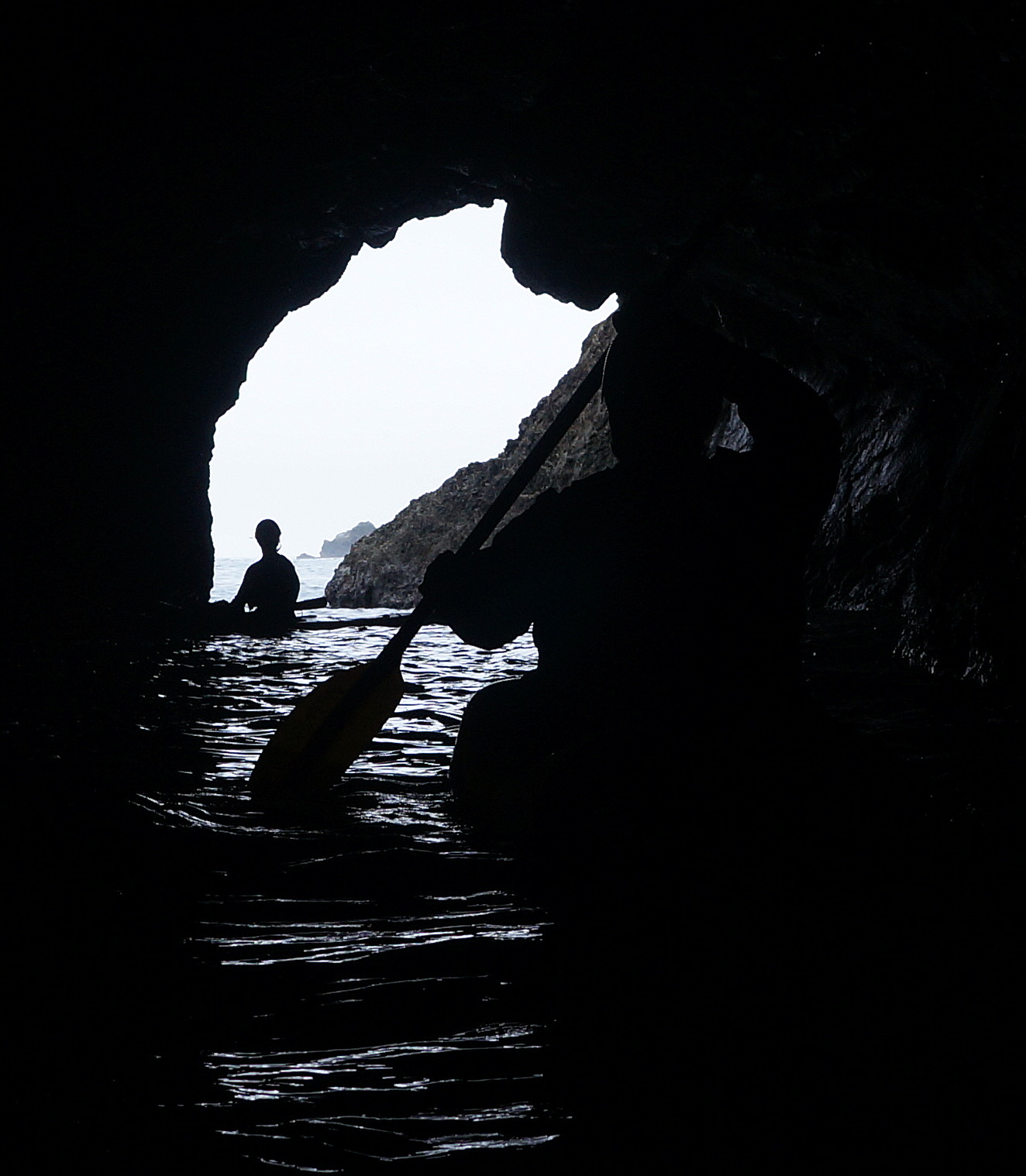
He's no stranger to the sea, but he lives and surfs in Southern California. Northern Californis is different. Mendocino is the best. We had a chance to go through tunnels, run slots, spot seal pups, surf a reef break, and top it off with some fresh abalone for dinner. All within a half-mile of the beach and home by 3pm. 

It's not often you get to show a waterman who's been paddling in California for forty years something new. Making him smile in wonder was by far the best part of my day. 

There are some debts that you can never repay. Some that you never have to. But it feels good all the same to get a little payback in when the opportunity arises.


Sunday, March 15, 2015

A Paddler's Journey: What it takes to create a book

As my regular readers know, I've been working on a book, a paddling memoir tracing my career as a kayaker. But I know from experience that most people don't really understand what all it takes to make a book, so I thought I'd explain the process a little more.

Putting words on paper (or into a word processor). That's what most people think of when you say you're writing a book. And you do have to do that. But that's the fun and easy part, and it's just the beginning. Sure, you could just ramble on for page after page, just collect the stuff I've already written here, but a book - a real and true book - is different than a collection of blog posts.

When I set out to write A Paddler's Journey, I needed a theme, something to hold it all together and give it a backbone to build around. I wanted to share some fun paddling stories, but that alone wouldn't be worthy of a book. I decided to show my progression through the sport and all the lessons I learned along the way. How becoming a paddler has influenced my life as a whole. I did this through stories, and the stories can be taken by themselves and enjoyed as individual adventures, but each one builds on the previous and they all lead somewhere - to the person I am today. I had to leave out some good stories that didn't fit. I had to include more than just the paddling - I had to talk about the people, since they influenced me as much as the water. It took a lot more thought and careful deliberation to come up with the content for the book.

But then I did write it all down. That was fun. Then I reread it and saw all my mistakes - mistakes everyone makes in a first draft - and that wasn't so fun. I edited, changing large chunks of text, deleting some chapters, including more of my emotions, trying to be more descriptive and entertaining in my prose. It takes a lot to edit a couple hundred pages.

Then I sent that draft off to several folks for feedback. Quite a number never responded. It's very understandable - everyone is really busy and even if they squeeze in the time to read it they might not know how to critique it. But spending months pouring your heart and sole into an artistic endeavor, one that reveals your innermost thoughts and lays out who you are as a human being, only to get chirping crickets in response, is never easy.

But some did respond. They said good things and they also made suggestions of ways to improve it. I didn't agree with all of them, and some were contradictory, but it gave me more information and allowed me to go back in for another draft. That's right, I re-wrote the entire book, tightening it up, making every sentence the best I could. Months of hard work.

That basically got me to a near-final draft. Currently I'm working on a little bit of final editing - more proofreading than anything, making sure there are no typos, no missed words or clumsy constructions. Going through 57,000 words individually to make sure each one is correct. It's not fun or easy and requires a huge amount of concentration. I take books seriously.

Is that it? Is having all those words sorted out enough? Not even close. I plan to publish my book as a physical thing as well as in electronic form. Both formats require more preparation.

Digital books are pretty easy to format. It takes a little more than just uploading your Word document, but not that much. The main thing is to make sure your code is clean, that the conversion engines can handle it (there are multiple eBook formats, so you have to have a slightly different source file for each one). It's about adjusting styles, removing tabs, including title page info, lots of little things. I've done it before so I know it's not too hard, but once again it requires a lot of attention to the details.

A physical book is a much larger beast to slay. You have to choose a font, decide on a trim size (how big the book will be), set chapter breaks, create drop caps for chapter openings, check the line spacing, the leading, the line wraps (removing widows and orphans), confirm margins and adjust headings for each section. It's typesetting, an art and industry unto itself, but as a self-publisher all the work falls on me unless I pay someone else to do it (which isn't financially realistic for a book that will likely make me a few hundred dollars). There are so many little things about a book that readers don't notice - unless it's off, then they know something's not right even if they can't name what it is.

Then there's cover design, another job that I'm doing myself. It's easy enough to put a title on top of a picture, but that cover is the main thing that sells the book, so choices of color palette, text sizing, font choice, word layout, all have a huge impact on how the reader first perceives that book. And if you get them to pick up the book (or stop to read the Amazon page), there's the back-cover copy, a one-paragraph summation of the entire project that needs to sell the book to a dubious buyer.

All of that to create a book, but it all means nothing if you don't market the book. You need to get people to look at the cover, to read the copy, to read sample pages. Again, with no budget to hire professionals, that means me talking about here on my blog, asking my friends to spread the word, calling distributors and even individual kayak shops to ask if they want to stock a few copies. All for a couple of dollars for each book you sell (and if you consider the average self-published book sells less than a hundred copies, you start to realize why very few authors actually make a living at writing books).

I'm nearing the end of the journey. I expect to have a proof copy by the end of next month and be ready to go to print a couple months after that. But I'm trying to do all this work while holding down a full time job and living the rest of my life (including teaching some kayaking now and then).

So if someone says they're writing a book, you might want to think that they're just typing away, writing out stories or ideas and having fun doing it. And that might be true. But if someone is a real author, if they're putting out a book that's equivalent to what would come from a professional publisher, then they're doing a whole lot more than that. As a reader, you're free to just enjoy the words, but maybe somewhere in the back of your mind try to appreciate all of the effort it takes to bring you each and every one of those books you breeze through and throw on the shelf to fade into memory. Writing is something special and I applaud anyone who takes it seriously and does it well. It's a journey every bit as challenging and rewarding as any kayak trip.

Tuesday, February 17, 2015

Stepping Back

This is a very personal post for me. It's not a reaction to anything in particular, but something that's been on my mind for the past few years and I'm writing this not to prescribe or advise, but to help me crystallize my own thoughts and feelings. I've stepped back my paddling, both in quantity and difficulty, and I'm no longer an extreme kayaker by any measure. It's been a conscious choice, but with a number of unconscious elements involved.

I don't think I ever really paddled on the edge. Sure, I run class V, but not the gnar. I've done some serious sea kayak trips and played in some rough conditions, including solo adventures, but I've never felt like it was at great risk. Adrenaline was never my goal, and I'm a pretty conservative person, more of a control freak than a free spirit. But there has always been danger involved in what I do and I am well aware that risk is a part of challenging paddling. I've had my share of injuries, and while I haven't lost any close friends to the sport, I do know people who've been seriously injured or killed while kayaking.

I accepted those risks and had a few close calls over the years (like this), but I never considered my life so precious that it needed to be held back, safe in a protected box, for fear of scratching it. I used my body like my gear - hard and with purpose, treating it with respect but knowing I pushed it to its limits and failure was a possibility. My life was my own and I made the payments on it. I didn't answer to anyone else and I would be the one to deal with its loss.

But I'm married now. I have a partner who shares my life with me, on and off the water. When we paddle together I feel more concern for her safety, even when there's no significant risk, than I ever cared for my own. When she's not around and I paddle harder stuff, I still think about her more than myself. I no longer worry about what an injury would do to me, but how it would affect her. I feel no urge to risk my life because I can't bear to think about the impact its loss would have on her. My life is not just my own, and I treat it like it borrowed gear, something that I am free to use but I need to bring it back whole and sound at the end of the day.

(Let me make this very clear now: she's very understanding and appreciative of my skill and experience, and while she worries about me as any wife would, she's never asked me to curtail what I do or limit my paddling for her sake. My actions and decisions are based upon what I choose to do and not in response to what others may expect of me.)

I have read many accounts of those who've died pursuing their passion. Lots of talk about how they died doing what they love, that it was their nature, and their loved ones understood that risk was a part of their life. How loving someone who does extreme sports means accepting the potential consequences. That a person shouldn't change who they are for the sake of those around them and those who live life on the edge experience it in a way that can't be appreciated from a safe vantage point. Lots of crap like that.

You see, I don't agree. I'm not criticizing those who make that choice. If you want to pursue adventures that have a serious risk of death, that's a choice you are free to make. I won't say it's wrong for you or a mistake. I'll gladly support my friends who run harder drops and venture further into the void, all the while knowing I'll miss them terribly if something goes wrong. But I won't hold their choice up as superior, I won't acknowledge that it's a necessity and I won't credit them for a life worth more than my own. It's a choice, we all make them, and sometimes what's right for us is not right for others, and sometimes we make a choice we think is right when it probably isn't. I strive to make my choices deliberately and with care, knowing what they might mean for me and weighing what they mean for those around me.

I've chosen to step back. I don't need to justify that to anyone else, and justification is not what I seek. I seek understanding.

When I look at a hard drop, or consider a new run to push myself, I no longer feel the excitement of the challenge. My life isn't focused on testing myself in sport and proving to myself that I can master what it takes. And that's what drew me to kayaking, whitewater in particular - the difficulty. I've always wanted to test myself and succeed, to conquer what originally limited me. The risk was a necessary side effect, but never a goal. It's not something I'll miss.

These days I have plenty of challenges in other aspects of my life. Writing is hard, in a way that you can't know if you don't do it seriously, with more obstacles and rejection than I ever thought I could face. The joy I find in improving my craft matches anything I've ever felt in a boat. Being married, planning a family, contributing to my local community, and building a life centered around others all are new and revelatory challenges, eclipsing the importance of becoming a better kayaker.

Other people kayak for different reasons; they push themselves because they feel an inner need and take away something different than I do. Their motivation is not the same as mine and their choices need to reflect their own rewards. Some of them will play it safe and still face tragedy, some will choose poorly and never face the consequences. Life can be arbitrary and harsh or random and lucky. All we can do - all we should do - is make the choices that are right in the moment and learn and grow from them without regret.

When I was a full time kayak instructor many of my students would tell me I was living the dream: getting paid to do what I was passionate about, working in beautiful settings among people having fun. I took the compliment but never agreed. I was living a life, with good moments and bad, fun times and hard work, and I enjoyed it immensely. But it wasn't a dream. It was a choice I made, a life just like anyone else's. Nowadays I live the life of many: I go to work in an office, I try to play a little on the weekend, I worry about car payments and retirement funds. This feels like a dream - a grand a glorious dream where my happiness exceeds what I thought was possible. And I don't want to wake up.

That's why I stepped back. Not out of fear, not out of a sense of responsibility or any pressure to become an adult. I simply don't want to do anything that might cut short the beautiful life I now have, or somehow hurt the one person who makes this all possible for me. I'm still being just as selfish as always, but I manage to see it from a wider perspective.

I'm glad there are people out there living on the edge. I like to know that others can experience the same joy I do, whether they find it on a waterfall's lip, a high mountaintop, or watching a little league game. I am no less passionate about kayaking, but my passion derives from a different source. It comes from seeing others develop and grow as paddlers, helping them overcome their fear or limitations. It comes from sharing the quiet and solitude of the wilderness with people I care deeply about. It comes from having nothing left to prove.

I like the view from my seat, safely buckled into the minivan of life. But don't be surprised if I still manage to get some dirt on the paint, or get a flat in the middle of nowhere. And I look forward to running into you all wherever our paths may cross, whatever vehicle you're in. So go paddle, take a risk, and know that all of life is an adventure that should be experienced to the fullest.